Talk to us about our Advertising options. We publish our bi-annual magazine and send out regular newsletters too.
Past Paper Download
Price
£50.00
Variations
With liquid carryover being the number 1 cause of gas processing failures, gas facilities rely on effective separation systems, filters, and hydrocarbon dewpoint measurements to prevent liquids entering pipelines and compressors. Yet field evidence proves that gas can be reported as “dry” while liquids are breaking through separation equipment. A deeper understanding of fluid dynamics helps explain why conventional measurement systems often fail to detect these events.
By combining process data, image metadata from process cameras, and machine-learning models, a new methodology is emerging for understanding and improving phase-separation performance. Process cameras provide real-time visual confirmation of dry gas or liquid events, while image metadata (brightness, variance, and sharpness) acts as a qualitative indicator of liquid presence. When synchronised with variables such as flow, pressure, temperature, differential pressure, and separator liquid level, these datasets reveal the true drivers of mist formation and carryover.
Machine-learning models built on this combined dataset can identify root causes, diagnose failing equipment, and predict when conditions are likely to deviate from expected behaviour, generating “smart alarms” that respond to dynamic process conditions rather than fixed thresholds.
We will be sharing a case study that demonstrates how this approach exposes hidden contamination events, distinguishes the performance of parallel trains, and identifies upstream bottlenecks affecting downstream compressors. By adding real-time, phase-aware visual insight to existing instrumentation, operators can optimise liquid separation and phase-separation systems and significantly improve reliability across the gas supply chain.

Talk to us about our Advertising options. We publish our bi-annual magazine and send out regular newsletters too.
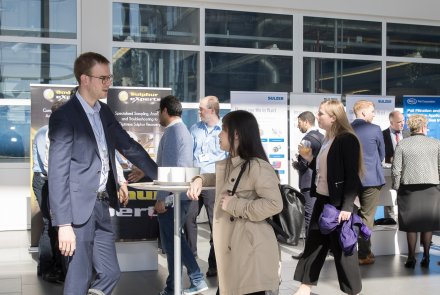
Our conferences provide a direct marketing channel to Directors and Process Engineers within the natural gas processing industry. You can meet and engage with around 100-member companies, all in one place. Click here to view our Sponsorship Opportunities.